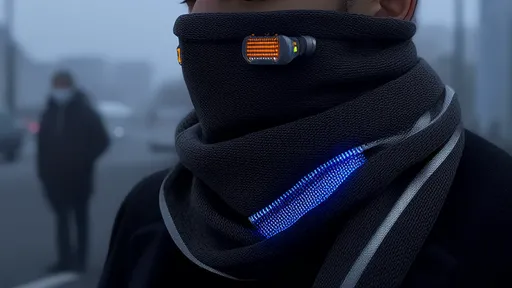
In a world where air quality has become a pressing concern for millions, a groundbreaking innovation is changing the way asthma sufferers monitor their environment. The asthma alert scarf, a seemingly ordinary fashion accessory, is revolutionizing personal health monitoring through its ingenious PM2.5-sensitive color-changing technology. This wearable tech solution represents the perfect marriage of style and substance, offering both protection and peace of mind to those vulnerable to airborne pollutants.
The scarf functions as a personal air quality detector, woven with special threads that react to particulate matter in the atmosphere. When PM2.5 levels rise to potentially dangerous concentrations, the fabric undergoes a visible color transformation, serving as an immediate visual warning to the wearer. This innovative approach to health monitoring eliminates the need for bulky electronic devices or constant smartphone checks, integrating environmental awareness seamlessly into daily life.
What makes this technology particularly remarkable is its simplicity and reliability. Unlike digital sensors that require power sources and regular calibration, the color-changing mechanism operates through advanced material science. The scarf's fibers contain microscopic structures that interact with airborne particles, causing light diffraction patterns that manifest as distinct color shifts. These changes occur gradually, allowing wearers to observe the air quality deterioration in real-time and take appropriate precautions.
The development of this life-changing accessory didn't happen overnight. Material scientists collaborated with respiratory specialists for nearly a decade to perfect the formula. Early prototypes could only detect extreme pollution levels, but through persistent refinement, the current version responds to much subtler changes in air quality. The scarf now provides a nuanced spectrum of color changes corresponding to different PM2.5 concentration ranges, giving wearers detailed information about their immediate environment.
For asthma sufferers, this innovation represents more than just convenience—it's a potential lifesaver. Many severe asthma attacks are triggered by sudden exposure to poor air quality, often without warning. The color-changing scarf serves as an early detection system, allowing individuals to move to cleaner areas or use medication preventatively before symptoms emerge. Medical professionals have noted that such proactive measures could significantly reduce emergency hospital visits related to pollution-induced asthma attacks.
The fashion industry has embraced this functional accessory with surprising enthusiasm. What began as a medical device has evolved into a stylish statement, with designers creating various patterns and color palettes that complement the technological function. The scarves are now available in multiple fabrics suitable for different seasons, ensuring year-round protection without sacrificing personal style. This successful integration of health technology into everyday fashion items represents a new frontier in wearable tech.
Beyond its primary function, the asthma alert scarf has sparked important conversations about air quality awareness. Wearers report becoming more conscious of pollution patterns in their daily routines—noticing how air quality changes during their commute, near construction sites, or even in different rooms of their homes. This heightened awareness often leads to behavioral changes that extend beyond scarf use, such as advocating for cleaner air policies or making more informed decisions about outdoor activities.
The environmental implications of this technology are equally promising. As more people use these scarves, researchers gain access to crowdsourced air quality data that was previously difficult to collect. While not as precise as professional monitoring equipment, the aggregate data from thousands of scarves can reveal pollution patterns and hotspots that might otherwise go unnoticed. Some cities have even begun exploring partnerships with the manufacturers to distribute these scarves in high-risk areas as part of public health initiatives.
Looking ahead, the technology behind the asthma alert scarf holds potential for numerous other applications. Researchers are exploring similar color-changing materials that could detect other environmental hazards like high pollen counts, chemical fumes, or even certain pathogens. The success of the PM2.5-sensitive scarf has demonstrated that health monitoring doesn't need to be intrusive or complicated—sometimes, the most effective solutions are those that blend effortlessly into our daily lives while providing crucial information when we need it most.
As air quality continues to be a global health concern, innovations like the asthma alert scarf offer hope for more empowered and informed living. By transforming an invisible threat into visible, understandable signals, this simple yet sophisticated technology is helping vulnerable populations navigate their environments with greater confidence and security. The scarf stands as proof that sometimes, the most profound technological advancements come not in the form of complex gadgets, but in reimagining how everyday objects can serve our health and well-being.

By /Jul 25, 2025

By /Jul 25, 2025

By /Jul 25, 2025

By /Jul 25, 2025
By /Jul 25, 2025

By /Jul 25, 2025

By /Jul 25, 2025

By /Jul 25, 2025
By /Jul 25, 2025

By /Jul 25, 2025

By /Jul 25, 2025
By /Jul 25, 2025
By /Jul 25, 2025

By /Jul 25, 2025

By /Jul 25, 2025

By /Jul 25, 2025

By /Jul 25, 2025
By /Jul 25, 2025

By /Jul 25, 2025