The ancient practice of adorning clothing with symbolic patterns and motifs has long fascinated anthropologists and fashion historians alike. For centuries, these intricate designs served as silent communicators of cultural identity, social status, and spiritual beliefs. Now, a groundbreaking collaboration between archaeologists and artificial intelligence researchers is shedding new light on these sartorial codes through the power of deep learning.
Oracle Bone AI, a specialized artificial intelligence system developed by a team at Stanford University, has demonstrated remarkable success in decoding the hidden meanings behind textile patterns found in archaeological artifacts. The system combines advanced neural networks with extensive databases of cultural symbolism to identify and interpret clothing signs that have puzzled experts for generations.
The technology represents a significant leap forward in material culture studies. Where human researchers might spend months analyzing a single garment's decorative elements, the AI can process thousands of images in hours, detecting subtle pattern variations and cross-referencing them with known symbolic systems from comparable cultures and time periods.
What makes this approach revolutionary is its ability to recognize symbolic patterns that transcend individual artifacts. The AI has identified recurring visual motifs that appear across geographically dispersed cultures, suggesting previously unknown connections in ancient trade routes or shared mythological concepts. One particularly striking discovery revealed a nearly identical serpent motif appearing in both pre-Columbian Andean textiles and West African ceremonial robes, separated by thousands of miles and centuries.
The research team trained their models using an unprecedented dataset of over 250,000 documented textile patterns from museum collections worldwide. This comprehensive visual library, combined with contextual information about each artifact's origin and cultural background, allows the AI to make probabilistic assessments about the likely meanings behind specific designs. The system doesn't replace human expertise but rather enhances it by highlighting connections that might otherwise go unnoticed.
Early applications of the technology have already challenged several long-held assumptions in textile archaeology. For instance, the AI's analysis of Minoan fresco clothing patterns suggests that what scholars previously interpreted as purely decorative floral designs may actually contain sophisticated mathematical representations of celestial events. Similarly, examination of Viking age tapestries indicates that their famous animal motifs follow specific compositional rules that may have encoded information about lineage and ancestry.
The implications extend far beyond academic circles. Fashion designers are taking note of these findings, with several major houses incorporating rediscovered ancient patterns into contemporary collections. Luxury brand Hermès recently launched a scarf series inspired by patterns the AI identified as having been used in Silk Road trade as markers of trust between merchants. The collection sold out within hours, demonstrating the enduring power of these ancient visual languages.
Perhaps most exciting is the technology's potential to give voice to cultures that left no written records. Many ancient societies expressed their worldviews primarily through material culture rather than texts. By systematically analyzing their clothing symbols at scale, researchers hope to reconstruct aspects of their belief systems and social structures that would otherwise remain lost to time.
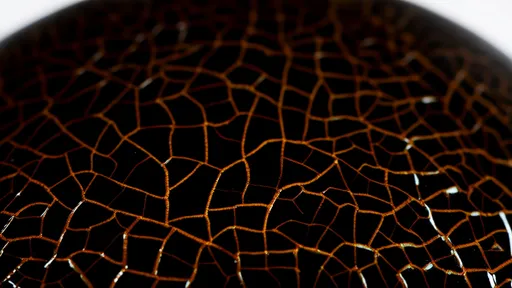
The Oracle Bone AI system takes its name from the ancient Chinese practice of inscribing oracle bones - one of humanity's earliest forms of symbolic communication. Like those ancient diviners seeking meaning in cracks and markings, today's researchers are using artificial intelligence to seek meaning in the weave and warp of ancient fabrics. The parallel isn't lost on the development team, who see their work as continuing this fundamental human impulse to find and create meaning through symbols.
As the technology continues to improve, its applications are expanding beyond historical analysis. Conservationists are using similar AI tools to identify the geographic origins of illegally trafficked cultural artifacts based on their textile patterns. Museums are implementing the systems to digitally reconstruct damaged or fragmentary textiles by predicting their original patterns based on comparable complete examples.
The ethical dimensions of this research haven't been overlooked. The team has established protocols for working with descendant communities to ensure interpretations align with living cultural knowledge where it exists. In several cases, the AI's findings have corroborated oral traditions that were previously dismissed by scholars as unreliable. This validation of indigenous knowledge systems represents an important step forward in decolonizing archaeological practice.
Looking ahead, researchers anticipate even more dramatic breakthroughs as the technology matures. Plans are underway to expand the system's capabilities to three-dimensional analysis of clothing construction techniques, which may reveal additional layers of meaning in how garments were assembled. Other teams are exploring applications in linguistics, using similar pattern recognition algorithms to identify potential connections between textile symbols and early writing systems.
What began as an experimental collaboration between computer scientists and archaeologists has blossomed into one of the most promising interdisciplinary research initiatives in cultural heritage studies. By harnessing the pattern recognition power of deep learning, scholars are unraveling the complex visual languages woven into humanity's shared wardrobe across millennia. Each decoded symbol adds another thread to the rich tapestry of human cultural development - a tapestry we're only beginning to properly appreciate.
The success of this project serves as a powerful reminder that some of humanity's most profound communications weren't written in ink or carved in stone, but rather spun in silk, wool, and cotton. As we develop new tools to read these textile texts, we open windows into ancient minds and worldviews that have been waiting centuries to be understood. The marriage of cutting-edge artificial intelligence with humanity's oldest forms of visual expression continues to yield discoveries that reshape our understanding of the past - and by extension, ourselves.

By /Jul 25, 2025

By /Jul 25, 2025

By /Jul 25, 2025

By /Jul 25, 2025

By /Jul 25, 2025

By /Jul 25, 2025

By /Jul 25, 2025

By /Jul 25, 2025

By /Jul 25, 2025

By /Jul 25, 2025
By /Jul 25, 2025

By /Jul 25, 2025
By /Jul 25, 2025

By /Jul 25, 2025

By /Jul 25, 2025

By /Jul 25, 2025

By /Jul 25, 2025

By /Jul 25, 2025

By /Jul 25, 2025