The world of live-stream shopping is about to undergo a sensory revolution. While visual and auditory stimuli dominate current platforms, a groundbreaking technology is emerging: molecular printing for real-time scent transmission. This innovation promises to transform how consumers interact with products through digital storefronts, adding the often-overlooked but powerful dimension of smell to the e-commerce experience.
At the heart of this development lies advanced molecular printing technology capable of digitally capturing, transmitting, and recreating complex scent profiles. Unlike traditional fragrance diffusion methods, these systems analyze and break down odors into their molecular components, then reconstruct them with remarkable precision at the receiving end. The implications for live commerce are profound – imagine being able to smell freshly brewed coffee during a morning equipment demonstration or experience the bouquet of a fine wine during a virtual tasting session.
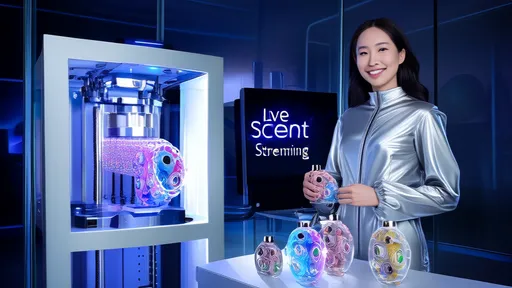
The science behind scent transmission represents a fascinating convergence of chemistry, engineering, and data science. Specialized sensors first capture the molecular signature of a scent, creating a digital fingerprint that can be transmitted instantly. On the consumer end, compact molecular printers use cartridges containing hundreds of base scent compounds to reconstruct the aroma. Early prototypes demonstrate surprising accuracy in recreating everything from delicate floral notes to rich, complex food aromas.
Pioneering companies in the fragrance and food industries are already experimenting with this technology. Luxury perfume houses have begun incorporating scent transmission into their live product launches, allowing viewers to experience new fragrances simultaneously with the host's description. Gourmet food brands use it to enhance cooking demonstrations, where the sizzle of a steak comes complete with its mouthwatering aroma. The emotional connection created through scent appears to significantly boost engagement and conversion rates.
Consumer psychology research confirms what marketers have long suspected – scent powerfully influences purchasing decisions. The phenomenon known as "scent-evoked nostalgia" can create instant emotional connections to products. Live scent transmission takes this effect digital, allowing brands to forge deeper relationships with customers across distances. Early adopters report that sessions featuring scent capabilities maintain viewer attention nearly 40% longer than traditional video streams.
The technical challenges remain substantial, particularly regarding scent persistence and rapid switching between aromas. Engineers are developing advanced air filtration systems to clear previous scents quickly and prevent olfactory fatigue. Another hurdle involves creating standardized scent "languages" that ensure consistency across different printer models and brands, much like color calibration in visual displays.
Privacy and safety considerations are being carefully addressed as the technology develops. Systems incorporate rigorous air quality monitoring and automatic shut-off features if any irregularity is detected. User controls allow individuals to adjust scent intensity or opt out completely, recognizing that scent preferences and sensitivities vary widely. These safeguards will prove crucial for mainstream adoption.
Looking ahead, the integration of scent with other sensory technologies could create fully immersive shopping experiences. Imagine a live-streamed bakery tour where viewers can see the golden crust of bread, hear it crackle as it cools, and smell its yeasty warmth – all from their living rooms. As bandwidth improves and devices become more sophisticated, multi-sensory commerce may become the new standard for digital retail.
The business implications extend beyond direct sales. Scent-enhanced live streams could revolutionize product education, allowing detailed appreciation of complex aromas in wines, coffees, or perfumes without physical samples. Real estate agencies might use it to convey the ambiance of homes, while travel companies could transport viewers to distant locations through authentic local aromas. The potential applications span nearly every industry where scent plays a role in the customer experience.
As with any disruptive technology, questions about accessibility and environmental impact arise. Current molecular printer designs prioritize sustainability, using biodegradable scent capsules and energy-efficient operation. Manufacturers are working to keep consumer device costs reasonable, while some envision scent transmission becoming a standard feature in future smart home systems rather than a standalone appliance.
The human element remains central to this technological evolution. Skilled hosts are learning to incorporate scent cues into their presentations much as radio personalities developed vocal techniques for an audio-only medium. The most effective practitioners use scent revelations as dramatic moments in their product narratives, creating anticipation and enhancing the sense of discovery.
Regulatory frameworks are beginning to emerge around digital scent transmission, particularly concerning accurate representation of products and safety standards. Industry groups are collaborating to establish best practices before the technology reaches widespread adoption. These efforts aim to prevent misleading uses while encouraging innovation in legitimate applications.
Early consumer feedback suggests enthusiastic reception, particularly among demographics that value experiential shopping. Younger generations raised on digital commerce appear especially receptive to these enhanced sensory experiences. Many report that scent transmission makes online shopping feel more "real" and reduces the hesitation that sometimes accompanies purchases of aromatic products unseen and unsmelled.
The development trajectory suggests scent transmission could follow a path similar to high-definition video – starting as a premium feature before becoming expected standard equipment. As the technology matures and scales, costs will likely decrease while capabilities improve. Future iterations may incorporate artificial intelligence to adjust scents based on individual preferences or even create entirely new aromatic experiences.
This innovation arrives at a time when live commerce is experiencing explosive growth globally. Adding scent transmission could accelerate this trend by making digital shopping more emotionally engaging and sensorially complete. The technology promises to narrow the experiential gap between physical and online retail, potentially altering consumer behavior and expectations permanently.
While still in its relative infancy, molecular printing for live scent transmission represents more than just a novel gadget – it signals a fundamental shift in how we conceptualize digital experiences. As the technology develops, it may redefine not just how we shop, but how we connect with products, brands, and each other across digital platforms. The future of e-commerce might not just be something we see and hear, but something we can smell as well.

By /Jul 25, 2025

By /Jul 25, 2025
By /Jul 25, 2025
By /Jul 25, 2025
By /Jul 25, 2025

By /Jul 25, 2025
By /Jul 25, 2025

By /Jul 25, 2025
By /Jul 25, 2025

By /Jul 25, 2025

By /Jul 25, 2025
By /Jul 25, 2025
By /Jul 25, 2025

By /Jul 25, 2025

By /Jul 25, 2025

By /Jul 25, 2025

By /Jul 25, 2025
By /Jul 25, 2025

By /Jul 25, 2025