Goryeo Celadon Crackle: Transplanting Crackle Algorithm to Lacquerware

Jul 25, 2025 By

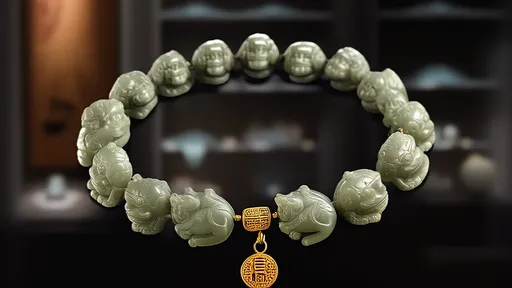
The world of traditional craftsmanship is witnessing an extraordinary fusion of ancient techniques and modern technology. In a groundbreaking development, researchers and artisans have successfully adapted the crackle algorithm originally developed for Goryeo celadon to lacquerware production. This innovative approach bridges a 900-year gap between Korea's ceramic heritage and contemporary lacquerware artistry, creating ripples of excitement across both conservation and creative circles.

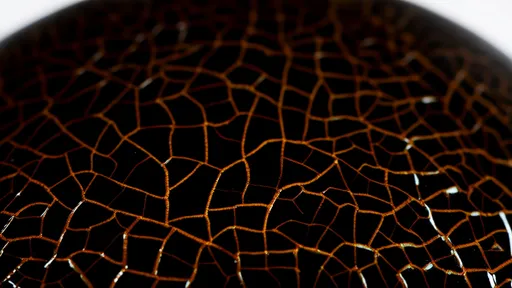
Goryeo celadon, renowned for its exquisite jade-green glaze and distinctive crackle patterns, has long been considered one of Korea's most significant cultural achievements. The accidental cracks that occurred during firing - known as "开片" (kaipian) in Chinese or "crackle" in English - became a celebrated aesthetic feature. These intricate networks of fine lines were traditionally seen as imperfections until connoisseurs began appreciating their natural beauty, comparing them to ice cracks on a winter pond or the veins of a lotus leaf.

Modern materials science has allowed researchers to decode the physics behind these captivating crackle patterns. Through microscopic analysis and computational modeling, teams at several Korean universities have developed algorithms that can predict crack formation based on glaze composition, kiln temperature curves, and cooling rates. What began as a conservation tool to authenticate antique celadon has now blossomed into a creative toolkit for contemporary artists.

The transplantation of this technology to lacquerware represents a bold leap across material boundaries. Master lacquer artist Park Ji-hoon, who led the experimental workshop at the National Intangible Cultural Heritage Center, explains: "While ceramics and lacquer differ fundamentally in their material properties, they share that magical moment when surface tensions create spontaneous patterns. We're not simply copying celadon cracks onto lacquer - we're allowing the lacquer to find its own version of this phenomenon."

Traditional lacquer techniques already include methods for intentional cracking, such as the Japanese kintsugi repair method or Chinese qiangjin (carved gold) decoration. However, these approaches work with existing cracks rather than guiding their formation. The new algorithm-informed method introduces controlled variables during the drying process - humidity levels, application thickness, and substrate preparation - that influence how the lacquer's surface tension releases, creating predictably beautiful crackle patterns.

Early results showcase remarkable diversity in the lacquer crackle patterns. Some pieces display delicate spiderweb networks reminiscent of fine celadon, while others develop bold, irregular fractures that highlight the lacquer's organic character. The research team discovered that adding subtle mineral powders to certain lacquer layers could produce colored crack lines without pigments - a phenomenon directly inspired by how iron oxides in celadon glazes create reddish-brown "blood veins" in the cracks.

Conservators are particularly excited about the implications for restoration work. Dr. Kim Seo-yeon, materials scientist at the Korea Cultural Heritage Foundation, notes: "Many priceless lacquer artifacts have crack patterns that tell the story of their creation and aging. Now we can analyze these patterns computationally to determine original workshop techniques or identify appropriate restoration methods." The algorithm helps distinguish between historically significant cracks and later damage, guiding conservation decisions.

Beyond preservation, the technology opens new creative possibilities. Young lacquer artists are experimenting with "directed crackle" techniques, using the algorithm to plan complex pattern formations. One striking example creates characters or symbols that only become visible when light passes through the crack network. Others are layering different crackle patterns to achieve three-dimensional depth effects previously impossible in lacquer work.

The project hasn't been without challenges. Lacquer's organic composition behaves differently from ceramic glazes, requiring significant algorithm adjustments. The research team spent nearly two years accounting for variables like urushiol polymerization rates and the impact of hemp cloth substrates. Some traditionalists initially questioned whether algorithm-assisted craftsmanship could maintain the spiritual essence of handmade lacquerware.

Park Ji-hoon addresses these concerns: "The algorithm doesn't replace the artist's hand - it extends it. Like a calligrapher understanding how ink will bleed on certain paper, we're developing deeper knowledge of our medium. The cracks still form naturally; we're just learning to have a conversation with the material." This perspective has gradually won over skeptics, especially after several algorithm-informed pieces received prestigious craft awards.

Internationally, the innovation is drawing attention from multiple disciplines. Italian restorers are exploring applications for Renaissance lacquer furniture, while Thai artisans see potential for enhancing naga motif decorations. A Swiss watchmaker has even commissioned experimental lacquer watch faces with microscopic crackle patterns that change subtly with temperature variations.

As the technique develops, researchers are documenting their findings through an open-access database that preserves both successful outcomes and instructive failures. This transparency aims to encourage global collaboration while maintaining proper attribution to the Goryeo celadon tradition that inspired the breakthrough. The Korean Ministry of Culture has designated the algorithm adaptation as an Important Intangible Cultural Property, ensuring its preservation as living heritage rather than patent-protected technology.

The fusion of Goryeo crackle patterns with lacquer artistry represents more than a technical achievement - it demonstrates how deep understanding of traditional crafts can spark innovation. As the lacquer pieces dry and their carefully guided cracks emerge, they carry forward an aesthetic legacy that began in twelfth-century kilns, proving that ancient beauty can find new expressions through thoughtful technological mediation.

Recommend Posts
Fashion

AI Copyright Notarization: Blockchain Rights Design Patent

By /Jul 25, 2025

The intersection of artificial intelligence, copyright law, and blockchain technology is reshaping how intellectual property is protected in the digital age. As AI-generated content becomes more prevalent, questions surrounding ownership and legal recognition have sparked innovative solutions. One of the most promising developments is the use of blockchain for copyright notarization and patent design verification, creating an immutable ledger of creative and inventive ownership.
Fashion

Mayan Solar Calendar: Driven by Astronomical Observation Data

By /Jul 25, 2025

The ancient Maya civilization, renowned for its sophisticated understanding of astronomy and timekeeping, left behind a legacy that continues to inspire modern innovation. Among their most remarkable achievements is the Maya solar calendar, a complex system that harmonizes celestial movements with earthly cycles. Today, this intricate knowledge is finding new life in an unexpected domain: textile design. The fusion of Maya astronomical data with contemporary jacquard weaving techniques is creating a fascinating intersection of science, art, and cultural heritage.
Fashion

Diabetes Monitoring Embroidery: Sweat Glucose Detection

By /Jul 25, 2025

In the ever-evolving landscape of diabetes management, a groundbreaking innovation is making waves: sweat glucose monitoring through smart embroidery. This fusion of traditional craftsmanship and cutting-edge technology promises to revolutionize how individuals track their blood sugar levels, offering a non-invasive and discreet alternative to conventional finger-prick tests.
Fashion

Wind Turbine Blade Handbags: Remanufacturing Retired Blades into Hard Shells

By /Jul 25, 2025

The wind energy sector has long been celebrated for its role in reducing carbon emissions and fostering sustainable development. However, as the industry matures, it faces an emerging challenge: what to do with decommissioned wind turbine blades. These colossal structures, primarily made of composite materials like fiberglass and carbon fiber, are notoriously difficult to recycle. Enter an innovative solution that’s turning heads in both the sustainability and fashion worlds—repurposing retired turbine blades into high-end, durable handbags.
Fashion

Scent Live Shopping: Real-time Molecular Printer Transmission

By /Jul 25, 2025

The world of live-stream shopping is about to undergo a sensory revolution. While visual and auditory stimuli dominate current platforms, a groundbreaking technology is emerging: molecular printing for real-time scent transmission. This innovation promises to transform how consumers interact with products through digital storefronts, adding the often-overlooked but powerful dimension of smell to the e-commerce experience.
Fashion

Parkinson's Anti-Tremor Clothing: Gyroscope Stabilization System

By /Jul 25, 2025

In a groundbreaking development for patients with Parkinson's disease, researchers and engineers have unveiled a revolutionary garment equipped with gyroscopic stabilization technology. This innovative "anti-tremor jacket" promises to dramatically improve quality of life by counteracting the involuntary movements that characterize the condition. Unlike traditional treatments that focus on medication or invasive procedures, this wearable solution represents a paradigm shift in managing Parkinson's symptoms through biomechanical intervention.
Fashion

Carbon Credit Wardrobe: Garment Carbon Footprint Points Trading

By /Jul 25, 2025

The fashion industry has long been criticized for its environmental impact, but a revolutionary concept is emerging that could turn our clothing choices into a force for good. The Carbon Credit Wardrobe initiative represents a bold new frontier where style meets sustainability through an innovative carbon footprint points trading system.
Fashion

Satellite Debris Jewelry: Recycled Space Junk Casting

By /Jul 25, 2025

In an unprecedented fusion of space technology and artisan craftsmanship, a Berlin-based jewelry studio has unveiled a groundbreaking collection forged from repurposed satellite debris. The Orbital Relics line represents humanity's first attempt to transform the growing menace of space junk into wearable art, with each piece containing authenticated fragments of defunct spacecraft that once orbited our planet.
Fashion

Asthma Alert Scarf: PM2.5 Sensing Color-Changing

By /Jul 25, 2025

In a world where air quality has become a pressing concern for millions, a groundbreaking innovation is changing the way asthma sufferers monitor their environment. The asthma alert scarf, a seemingly ordinary fashion accessory, is revolutionizing personal health monitoring through its ingenious PM2.5-sensitive color-changing technology. This wearable tech solution represents the perfect marriage of style and substance, offering both protection and peace of mind to those vulnerable to airborne pollutants.
Fashion

Deep Learning Decodes Clothing Symbols

By /Jul 25, 2025

The ancient practice of adorning clothing with symbolic patterns and motifs has long fascinated anthropologists and fashion historians alike. For centuries, these intricate designs served as silent communicators of cultural identity, social status, and spiritual beliefs. Now, a groundbreaking collaboration between archaeologists and artificial intelligence researchers is shedding new light on these sartorial codes through the power of deep learning.
Fashion

Xixia Wooden Movable Type: Printing Technique Transferred to Denim Texture

By /Jul 25, 2025

The ancient art of woodblock printing, a cornerstone of human communication for centuries, has found an unexpected modern application: the transfer of intricate patterns onto denim fabric. This innovative fusion of history and contemporary fashion draws inspiration from the Xixia (Western Xia) dynasty's wooden movable type, a lesser-known but pivotal development in the evolution of printing technology. The marriage of these two seemingly disparate worlds—12th-century Chinese innovation and 21st-century textile design—has sparked a quiet revolution in sustainable fashion and cultural preservation.
Fashion

Self-Disinfecting Mask: UV-C Light Invisible Woven Edge

By /Jul 25, 2025

The global health landscape has undergone a seismic shift in recent years, with face masks evolving from temporary protective gear to everyday essentials. Amid this transformation, a groundbreaking innovation has emerged: self-disinfecting masks with UV-C light technology woven into their very fabric. These next-generation masks promise not just passive protection but active defense against pathogens, potentially rewriting the rules of personal protective equipment.
Fashion

Goryeo Celadon Crackle: Transplanting Crackle Algorithm to Lacquerware

By /Jul 25, 2025

The world of traditional craftsmanship is witnessing an extraordinary fusion of ancient techniques and modern technology. In a groundbreaking development, researchers and artisans have successfully adapted the crackle algorithm originally developed for Goryeo celadon to lacquerware production. This innovative approach bridges a 900-year gap between Korea's ceramic heritage and contemporary lacquerware artistry, creating ripples of excitement across both conservation and creative circles.
Fashion

Metaverse Tailor Shop: Customizing Virtual Avatars into Physical Clothing

By /Jul 25, 2025

The fashion industry's next frontier isn't on Paris runways or Milan showrooms - it's unfolding in the pixelated ateliers of the metaverse. A new breed of digital tailors are bridging the virtual and physical worlds by crafting real-world garments designed exclusively for customers' virtual avatars. This emerging sector turns the traditional design process inside out, creating clothes that originate from digital identity rather than physical form.
Fashion

Fossil Reconstructed Sustainable Bone and Horn Materials

By /Jul 25, 2025

In a groundbreaking development at the intersection of paleontology and materials science, researchers have unlocked the potential of fossilized bone powders to create sustainable alternatives to traditional bone and horn materials. This innovative approach not only offers an eco-friendly solution to resource depletion but also opens new avenues for biomimicry in material design. The process involves extracting and repurposing mineralized collagen from carefully selected fossils, yielding a composite with remarkable structural integrity.
Fashion

Stratospheric Aerosol Coating Technology for Stardust Collection

By /Jul 25, 2025

The stratosphere, a layer of Earth's atmosphere extending from about 10 to 50 kilometers above the surface, has long been a subject of scientific intrigue. Recently, a groundbreaking technology known as Stardust Collection Coating has emerged, promising to revolutionize our understanding and manipulation of stratospheric aerosols. This innovative approach involves the precise deposition of specialized coatings on aerosol particles, enabling unprecedented control over their behavior and interactions. The implications of this technology span climate science, atmospheric research, and even potential geoengineering applications.
Fashion

Replicating the Divine Pattern on Liangzhu Jade Cong Chain with Micro-engraving Technology

By /Jul 25, 2025

The recent unveiling of the Liangzhu jade cong chain, featuring intricately carved deity motifs replicated through micro-engraving techniques, has sent ripples through the archaeological and art conservation communities. This extraordinary artifact not only showcases the technological prowess of Neolithic China but also redefines our understanding of ancient craftsmanship. The level of precision achieved in replicating the sacred emblems—often no larger than a grain of rice—challenges conventional assumptions about the tools and methods available over 5,000 years ago.
Fashion

Anti-Thrombosis Compression Socks: Aesthetic Gradient Compression

By /Jul 25, 2025

The world of medical compression wear has undergone a quiet revolution in recent years, blending clinical efficacy with aesthetic appeal. Among these innovations, anti-thrombosis compression stockings stand out as a prime example of how functional medical devices can transcend their purely therapeutic role. These specialized garments, once relegated to the realm of unattractive beige leg coverings, now embody what industry insiders call "gradient compression aesthetics" - a harmonious marriage of science and style.
Fashion

NFT Trial Wear Rights: Digital Collectibles Exchange for Physical Experience

By /Jul 25, 2025

The intersection of digital collectibles and physical retail experiences has taken a revolutionary turn with the emergence of NFT-powered try-on rights. What began as a niche experiment in the Web3 space has now evolved into a tangible bridge between virtual ownership and real-world utility. Luxury brands, streetwear labels, and even sportswear giants are racing to implement systems where owning a digital asset unlocks exclusive access to physical products or experiences.